Preparing a defensible quote
LLMs can generate plausible quotes quickly. The harder challenge was creating one the business owner could confidently stand behind.
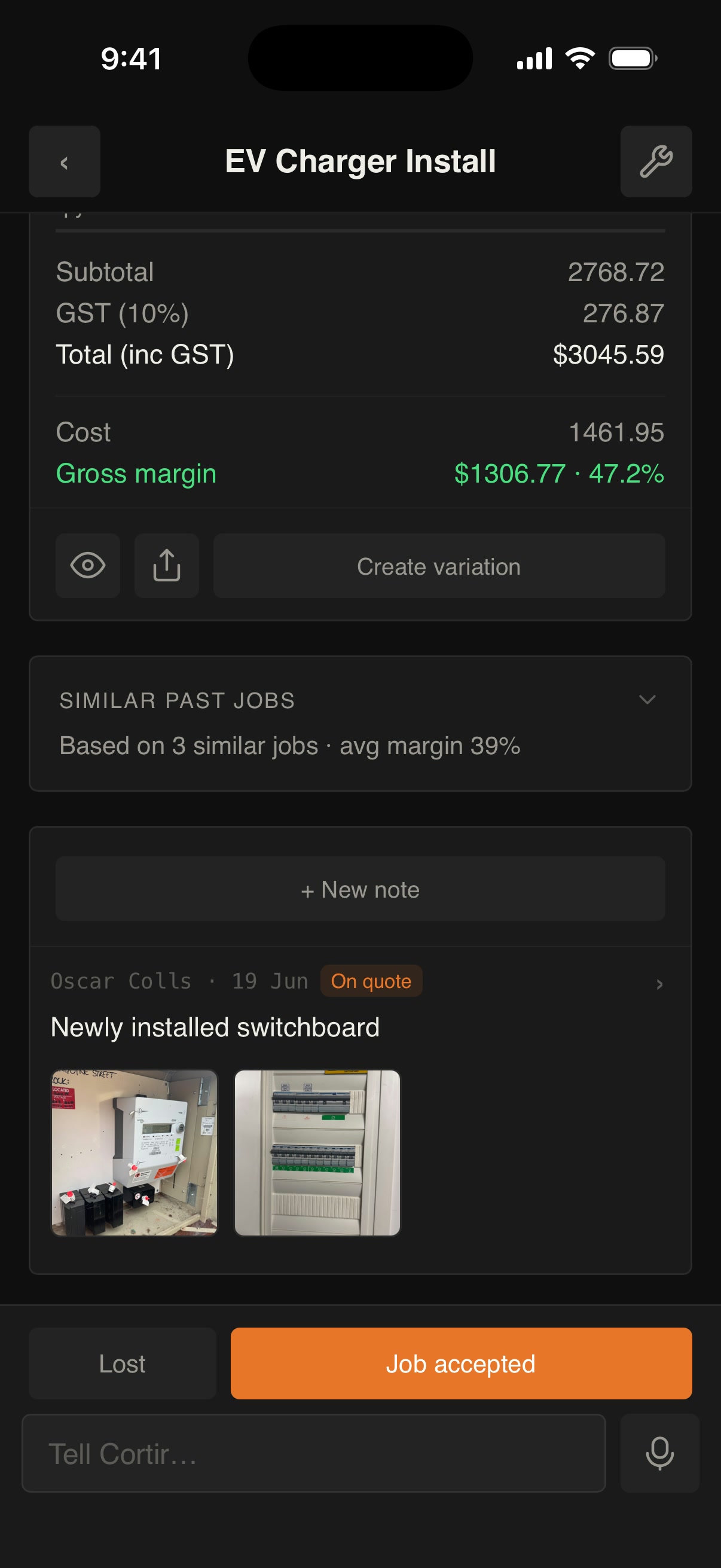
I grounded Cortir’s quoting process in the electrician’s own business context. It draws on their supplier price books, their actual costs from similar jobs, and relevant Australian electrical standards.
But better inputs alone were not enough.
The business owner remained responsible for every quote they sent. I therefore designed each line item with a justification showing where the figure came from and why it was included.
Choose the right interaction for the task
I initially imagined Cortir as a conversational product. But after seeing an early user repeatedly struggle to make a precise quote change through chat, I realised detailed editing needed direct controls.
My first design expanded those controls within each quote line. This added more fields to an already information-dense screen without creating a clear editing focus.
I moved the controls into a bottom sheet instead, giving each line its own focused editing space. Electricians could move between line items with a swipe, then return to the full quote when they were done.
Conversation remained useful for broad instructions; direct controls handled the details.
Talk to it like your office manager
The electricians I spoke to saw the value in software, but often found it confusing and difficult to use.
So I gave every interface a dictation option. Instead of learning where everything lived, the electrician could simply say what they wanted to do, much like they would to an office manager.
The metaphor had limits. Cortir could only act within a defined set of tasks, but it gave electricians a familiar way to interact with the product.
The objective changes with the job
At enquiry, the electrician needs enough context to scope the work and choose a next step. While drafting, the challenge is balancing a competitive price with a healthy margin. Once the quote is sent, attention shifts to following up and securing the job.
I designed the workbench to adapt at each stage, surfacing the information and actions needed for the decision at hand.
A quote the customer can understand
Once sent, the quote has a new audience. The customer needs to understand the work, feel confident in the price, and decide what to do next.
I designed the hosted quote around that decision, leading with a plain-language summary while keeping the supporting detail close at hand. A clear path to acceptance helps the customer move forward.
Turn silence into signal
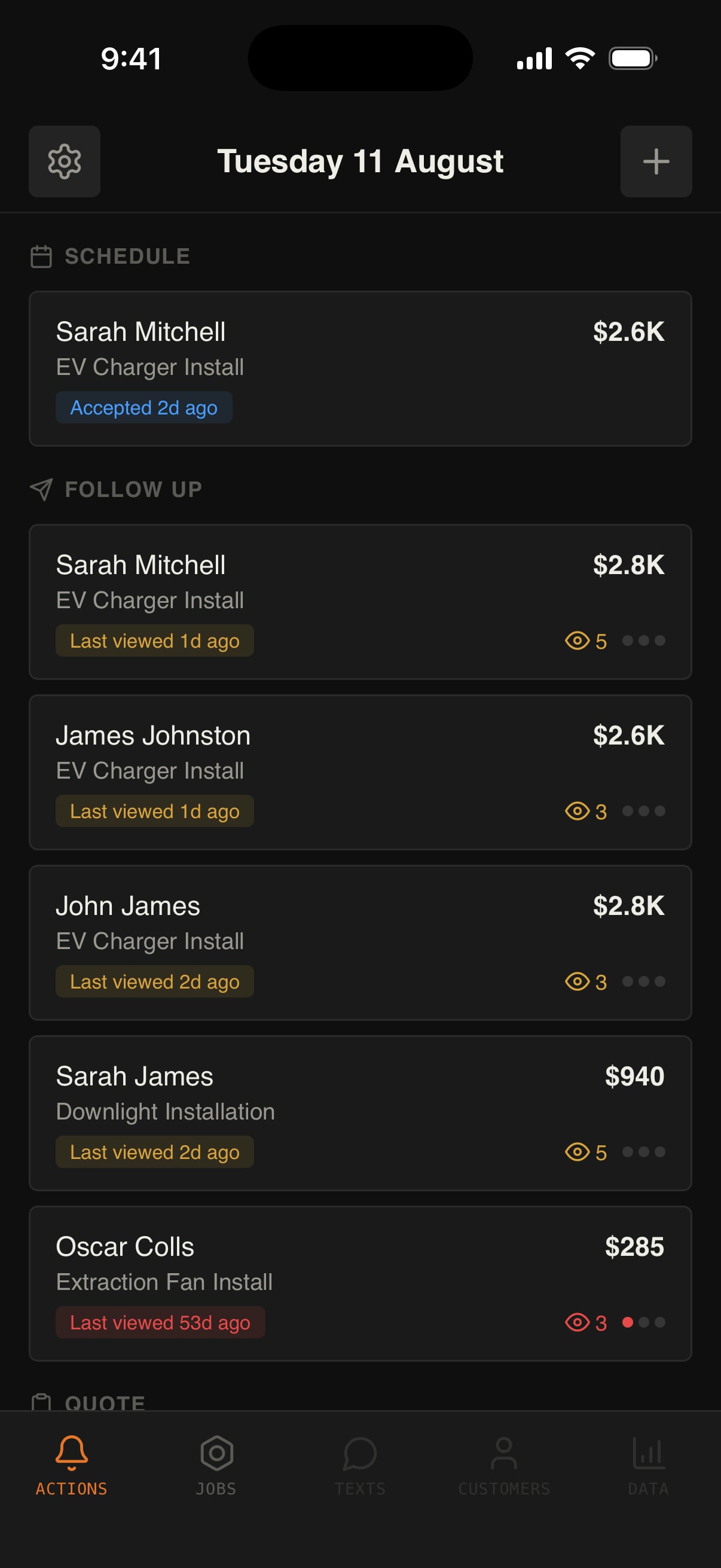
Once a quote is sent, the electrician is often left guessing about what happens next.
Cortir surfaces view count, recency and device activity. This helps electricians focus on active opportunities and follow up while the quote is still fresh.